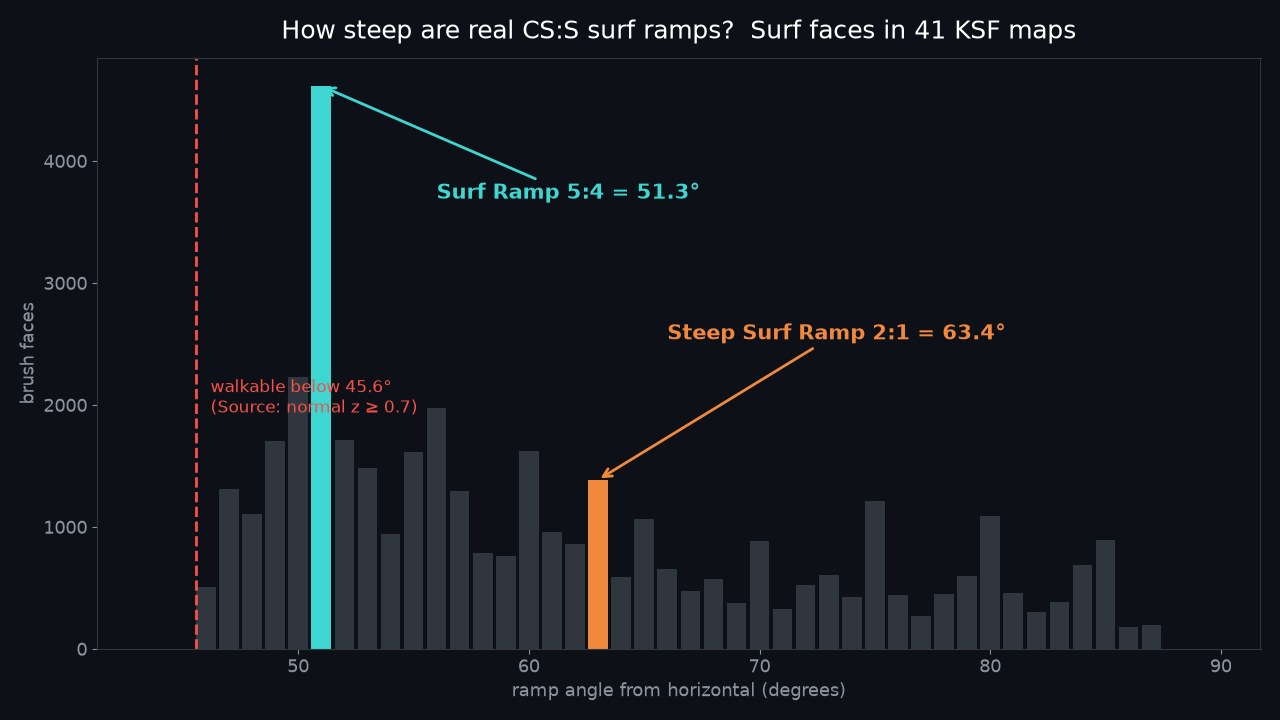
Every surf face in 41 local KSF maps: 51 degrees is by far the most common, so Surf Ramp uses a 5:4 slope (51.3 degrees); Steep Surf Ramp uses 2:1 (63.4 degrees). A 1x1 45-degree wedge would be walkable ground in Source, not a surf ramp.
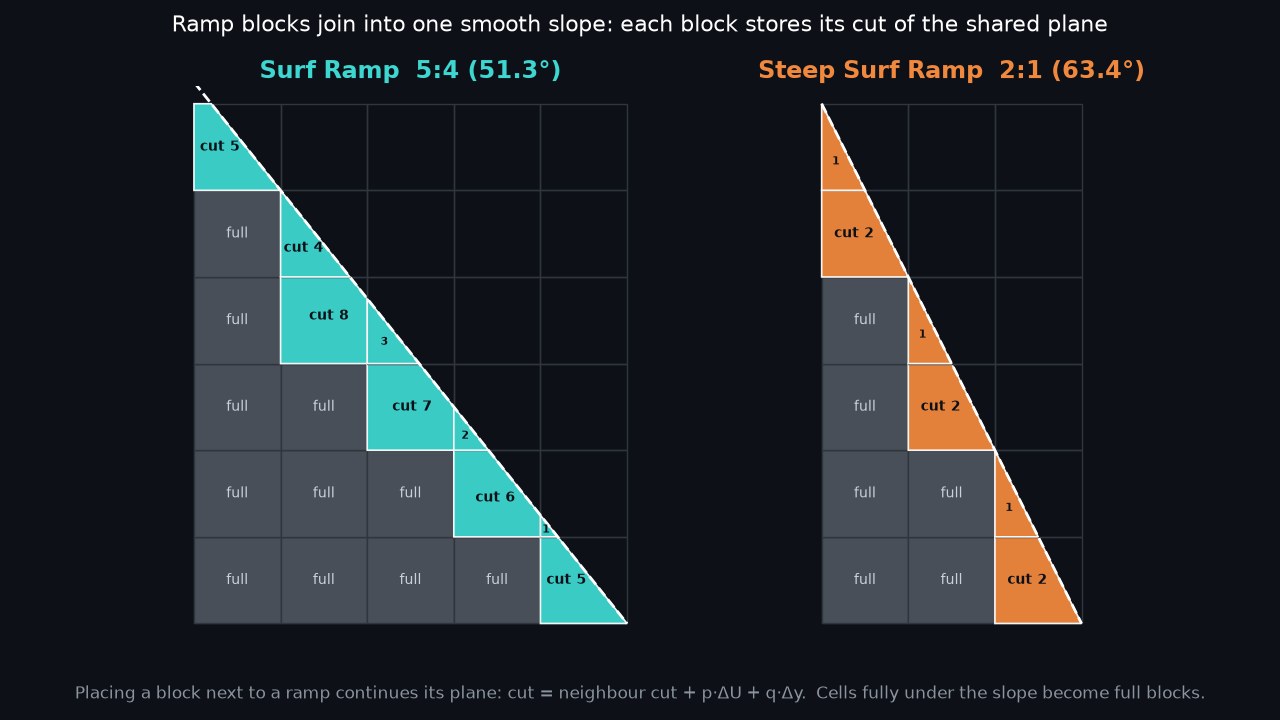
Each ramp block stores its cut of a shared plane, so blocks placed next to each other continue the same slope at any size. The geometry (RampCell) is tested for exact plane continuity across neighbours.
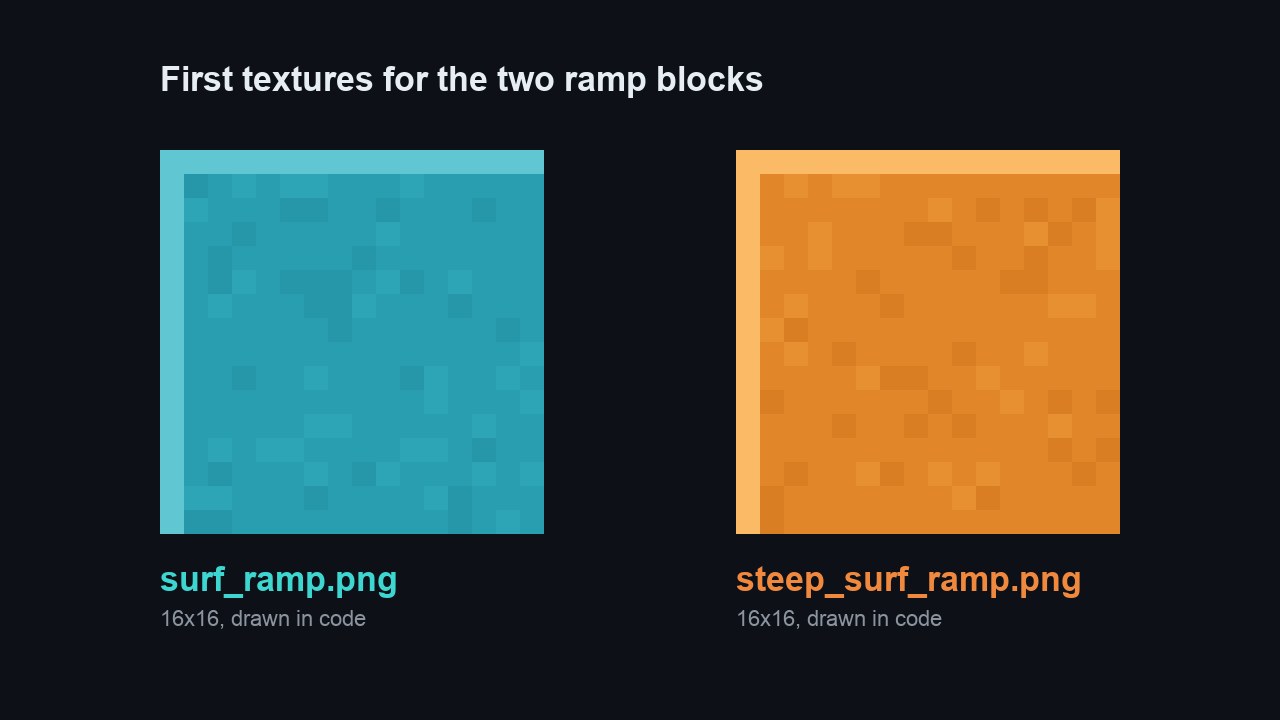
The blocks agent drew two 16x16 textures in code (no fal key): cool teal for the 51-degree Surf Ramp, amber for the 63-degree Steep Surf Ramp, with a lit top/left edge to fit Minecraft's pixel style.
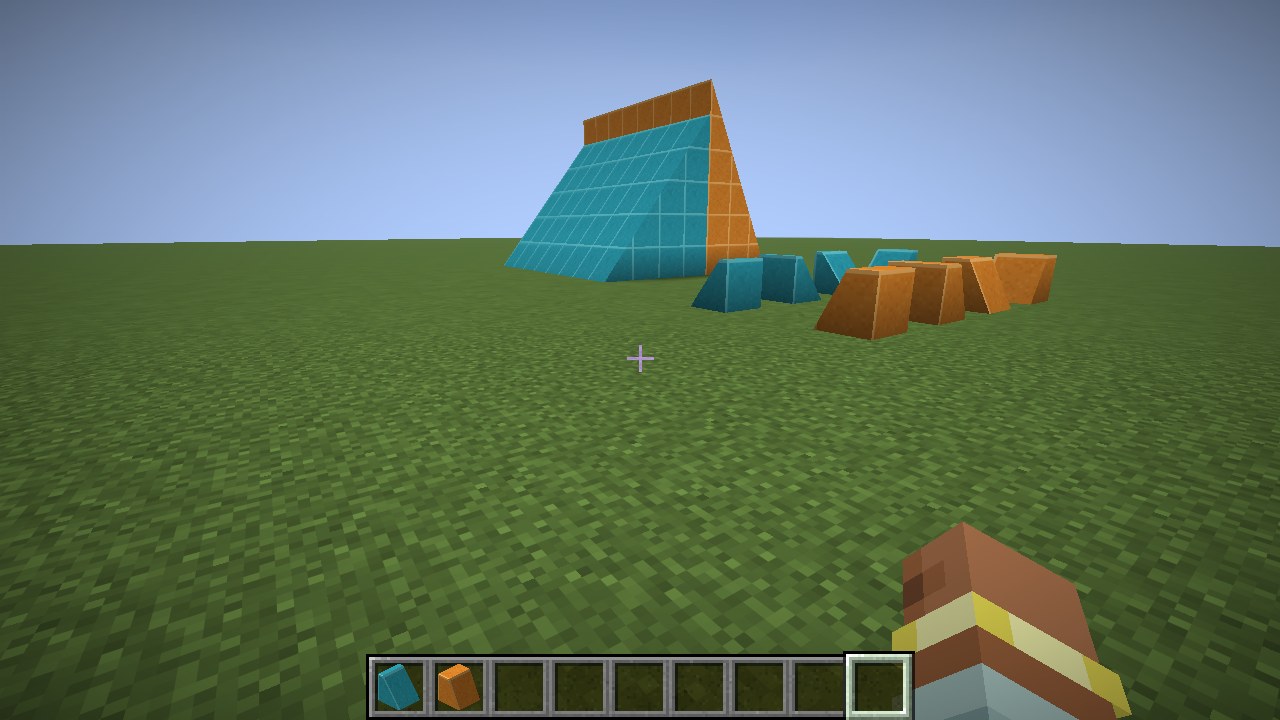
The client game test builds a showcase in a superflat world: a joined 51-degree Surf Ramp (teal) backed by a 63-degree Steep Surf Ramp (amber), plus single blocks of each in all four facings. Slopes render as exact geometry, not stair steps.
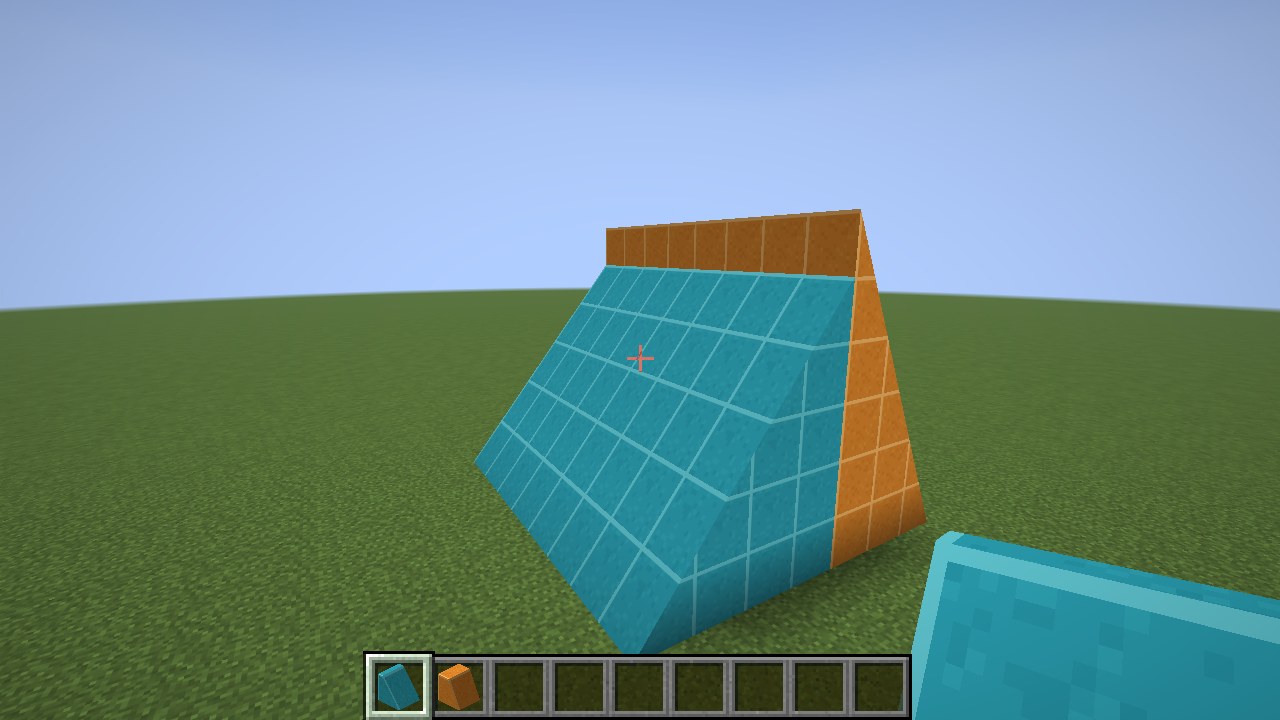
Up close, the blocks join into one continuous slope with the texture lined up across cells. The hotbar shows both ramp items as wedges.
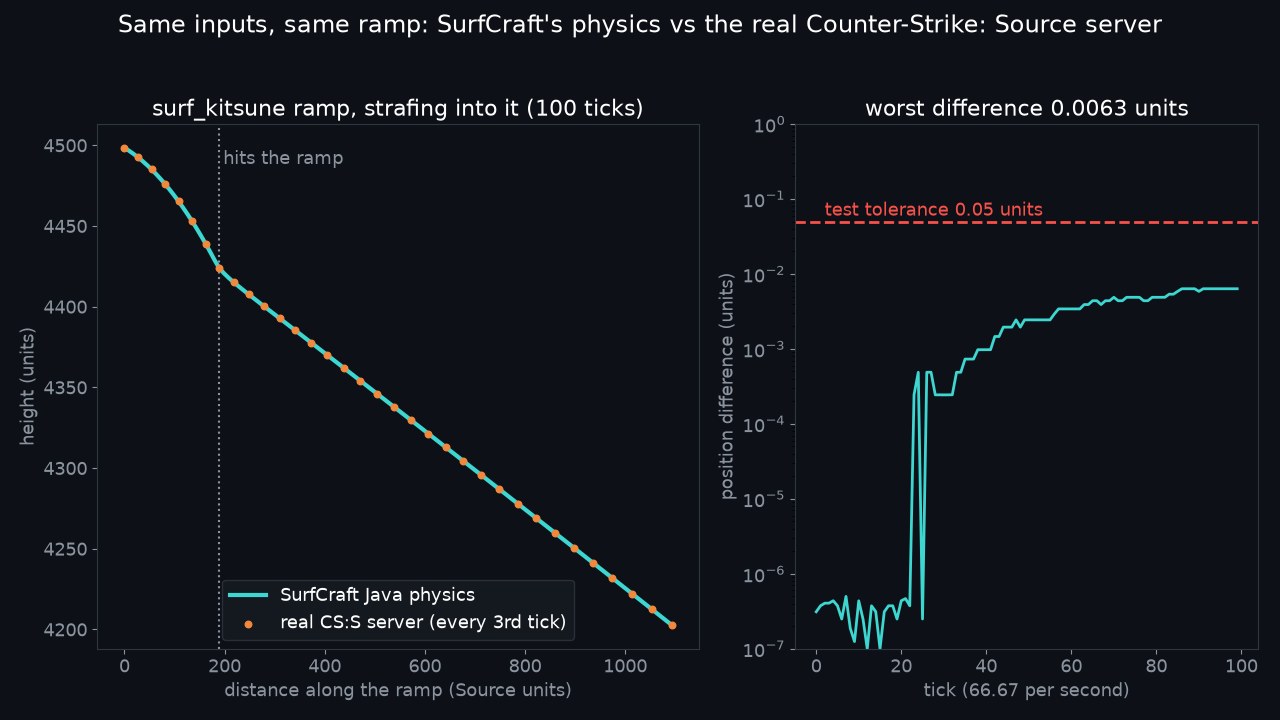
The physics port replays a recording from a real Counter-Strike: Source server on surf_kitsune's ramp: same inputs, same ramp, worst difference 0.006 units over 100 ticks (tolerance 0.05). 17 recordings (18 replays) pass this way.
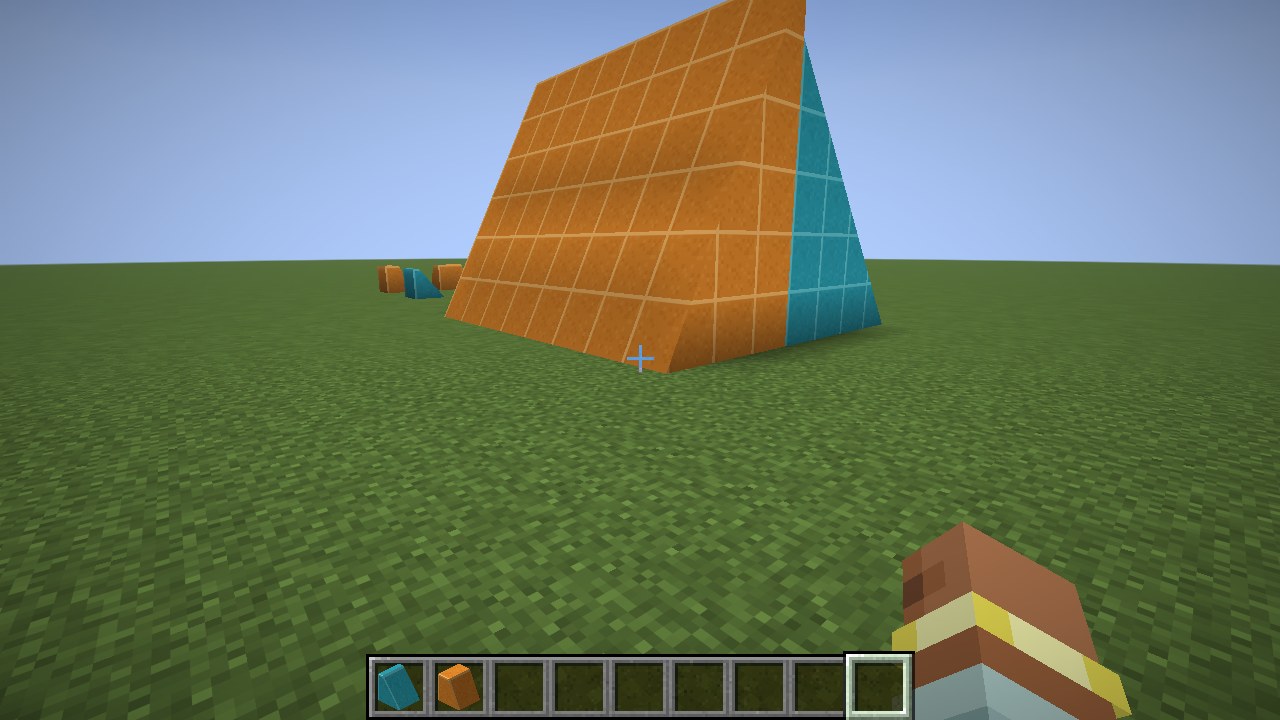
The 2:1 side of the showcase: eight blocks long and six tall, one smooth plane with a continuous grid.
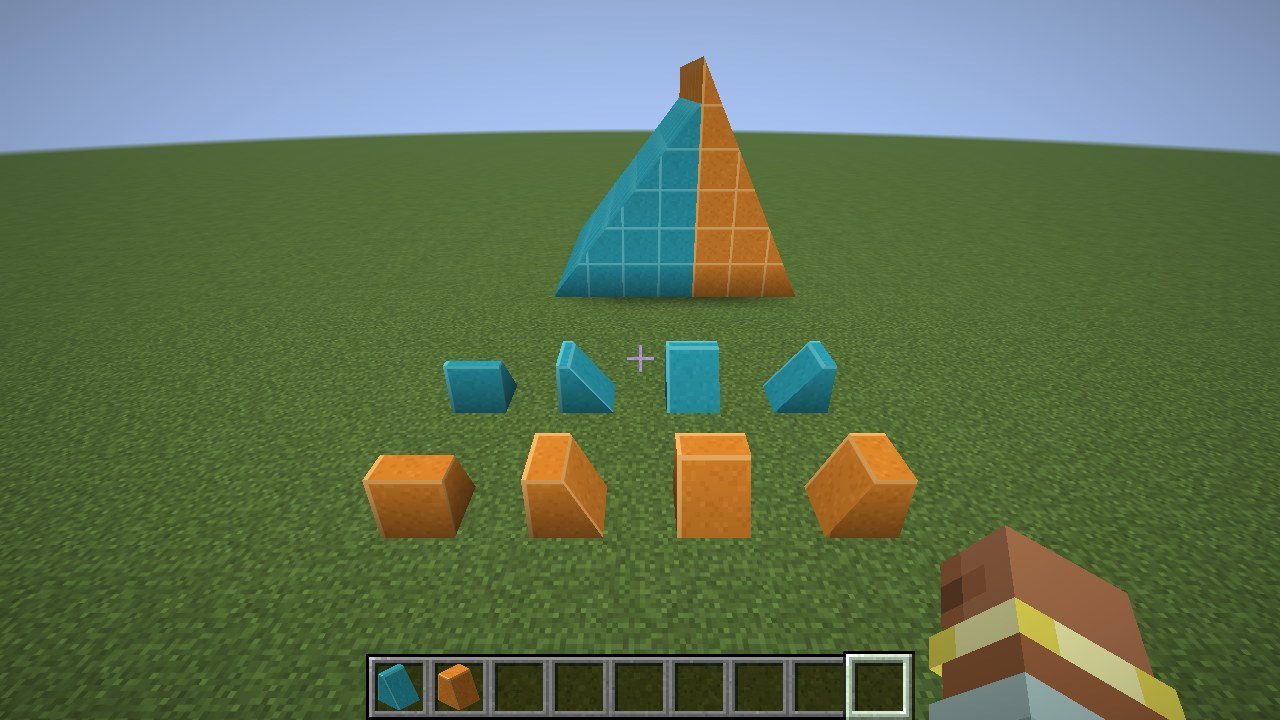
Single ramp blocks facing north, east, south and west. Behind them, the cross-section of the joined showcase: a 51-degree side and a 63-degree side meeting at the ridge.
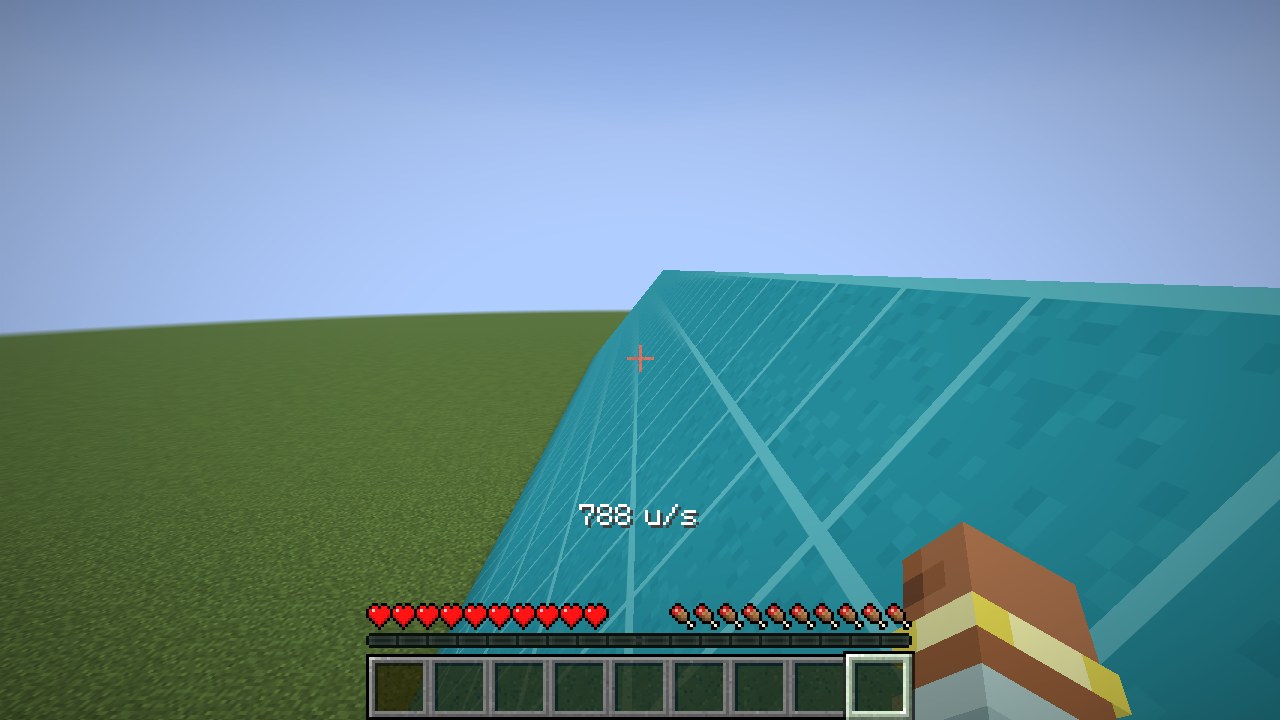
The CS:S movement core now drives the player in Minecraft: dropped onto a 51-degree ramp at 788 units/s while holding the strafe key into the slope, the player glides along it. The speedometer above the hotbar shows horizontal speed in units/s.

SurfCraft's surf-building tool: a 16x16 CS:GO-style karambit drawn in code, with a claw blade in a Fade finish (gold, purple, pink), a black grip and a finger ring. Zoomed, at 1x to 8x, and in hand next to the hotbar.
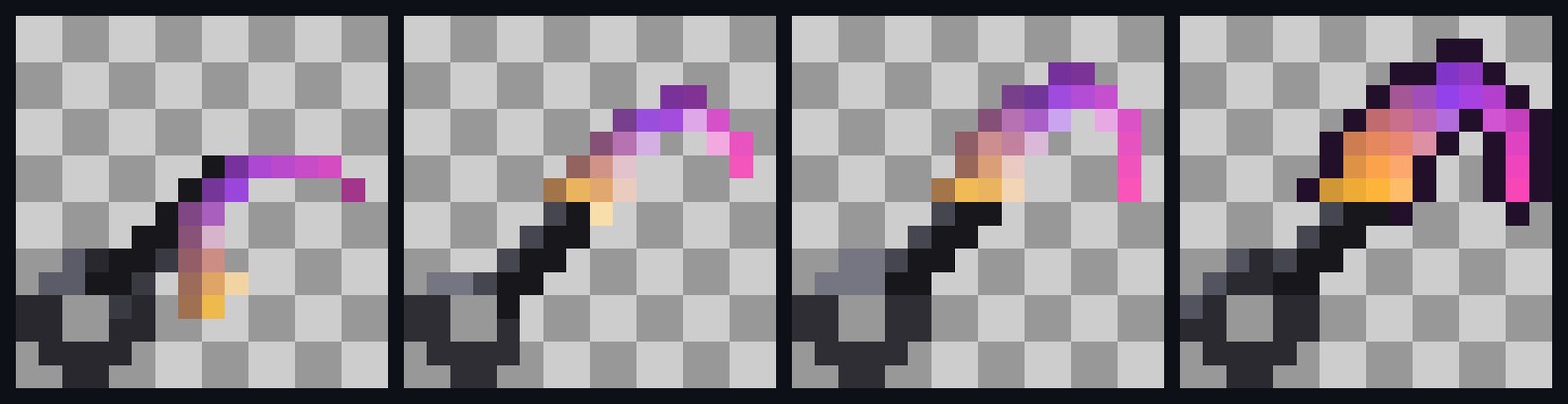
Before and after: the first tries drew a flat arc with a 1-pixel ring. The final sprite has a hooked claw blade with a dark outline (like vanilla swords) and a ring with a clear hole.
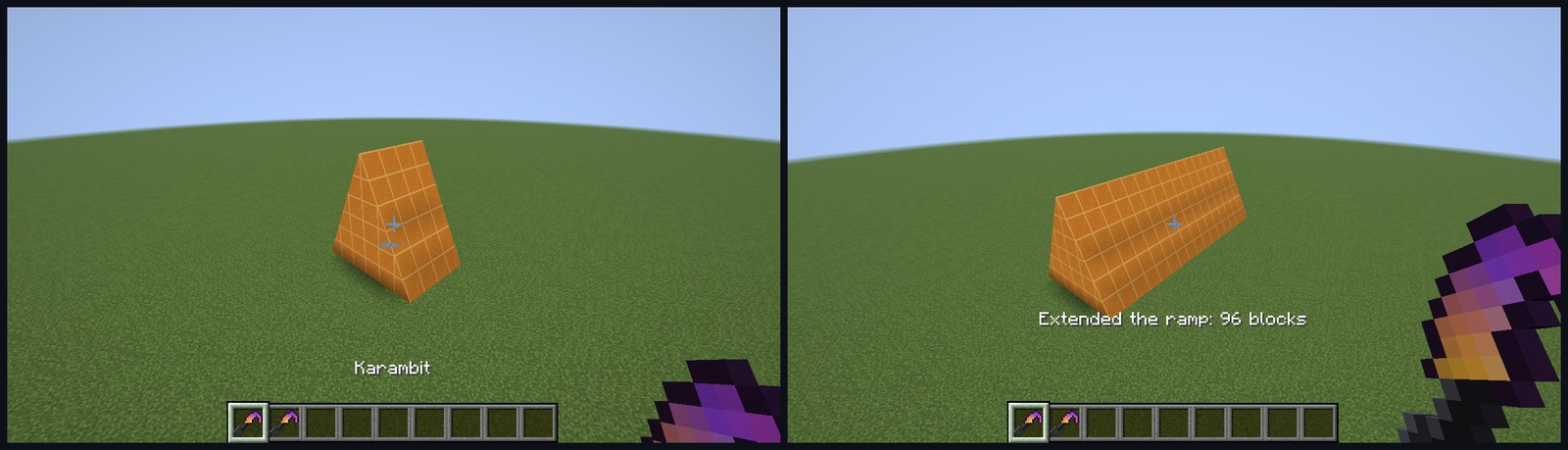
Sneak + right-click copies a hand-built 63-degree chunk (6x6x4, 96 blocks) onto the knife. Three right-clicks on the ramp put a copy after its end each time: 16 blocks long, every cell on the same slope plane.
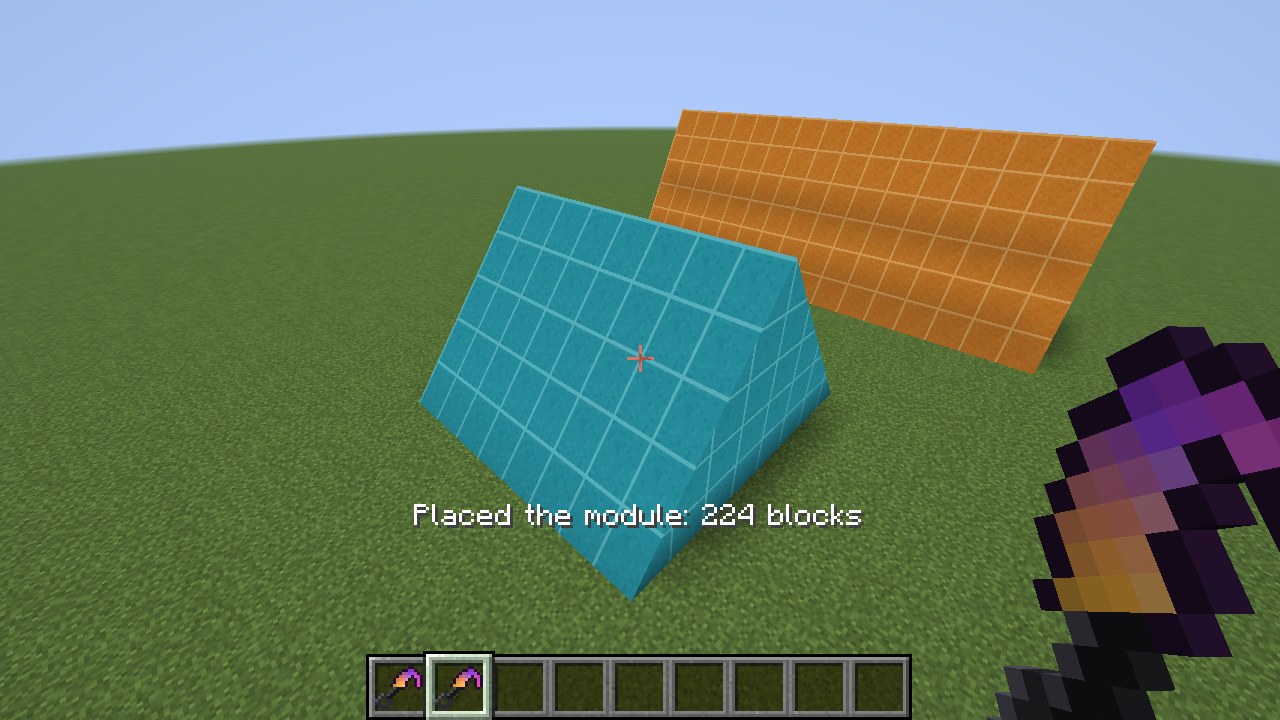
A fresh knife places the classic two-sided 51-degree ramp in one click: Surf Ramp 5:4 on both sides of a ridge, 8 wide, 5 tall, 8 long (224 blocks), cut with the ramp plane formula.

Holding the knife outlines the box a click would fill, using the server's own placement code: green when it fits, red with the blocked cells outlined, and at a ramp's end the next extension.
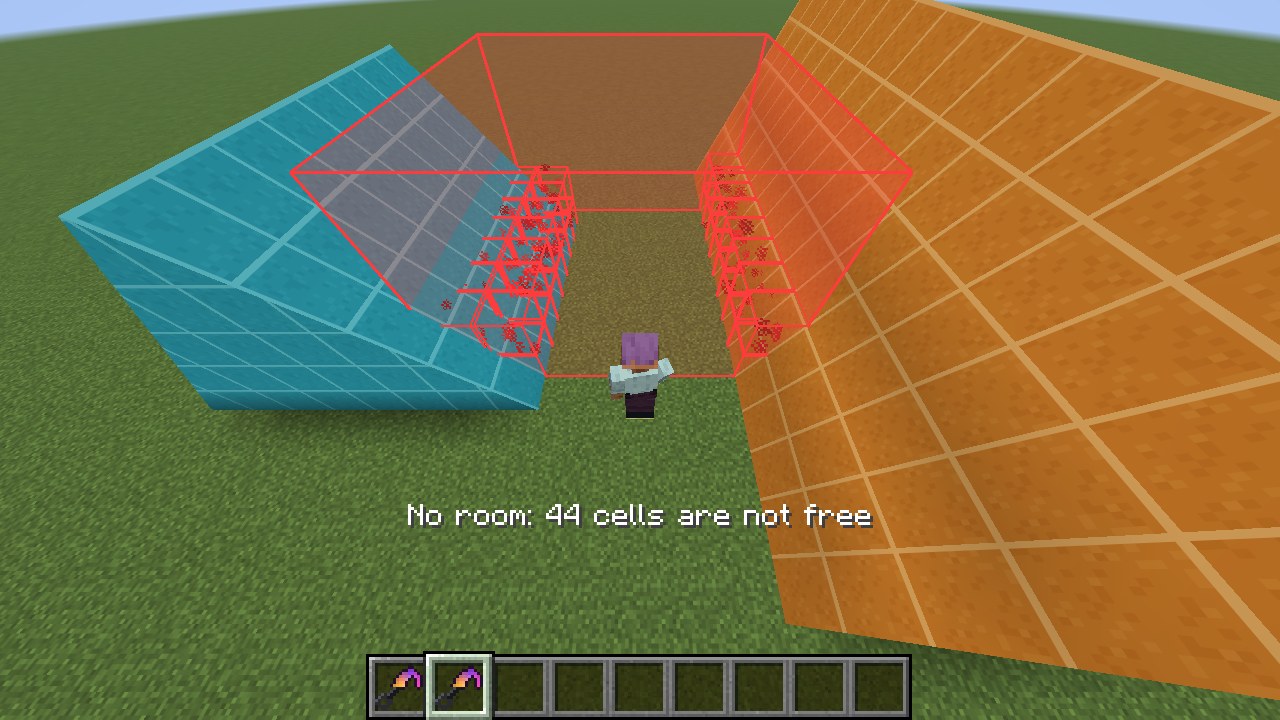
Clicking where it doesn't fit places nothing: the action bar gives the reason and red dust marks the 44 cells in the way. In survival the knife also takes one item per block, or lists what's missing; sneak + right-click in the air undoes.
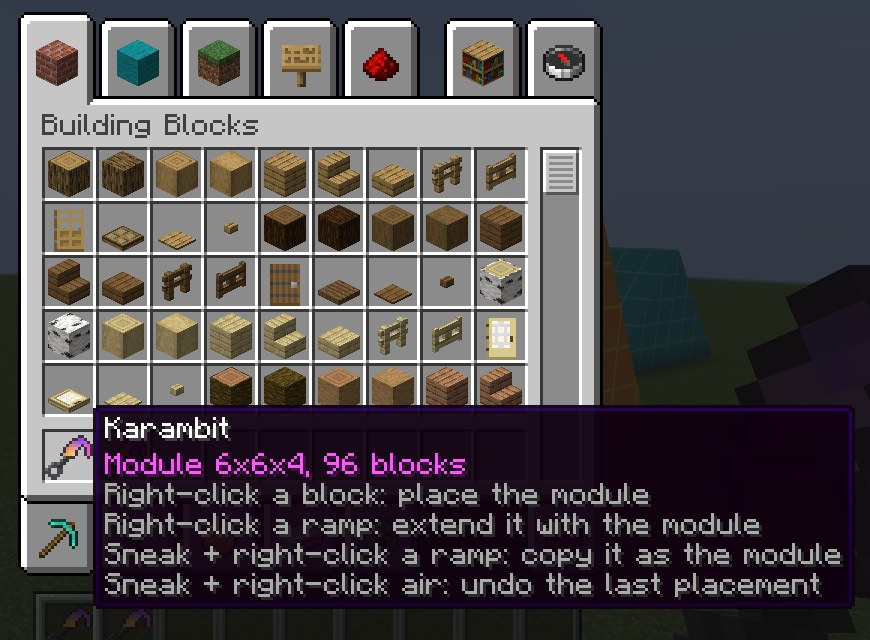
The copied module is stored on the item (palette plus run-length encoded blocks), so it survives restarts; the tooltip shows its size and the controls.
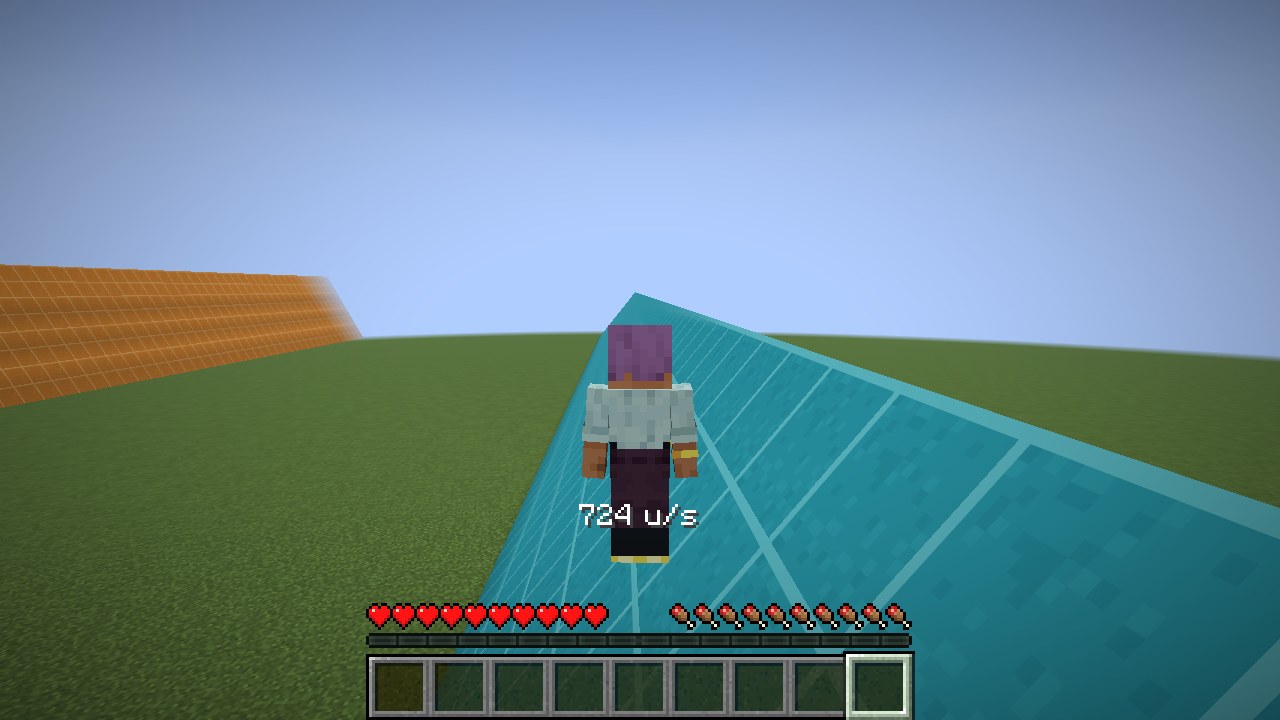
Third-person view of a survival surf run on the 51-degree ramp at 724 units/s. The legs stay still while sliding instead of running in place, the speedometer reads horizontal speed, and the server accepted every move without a single correction.
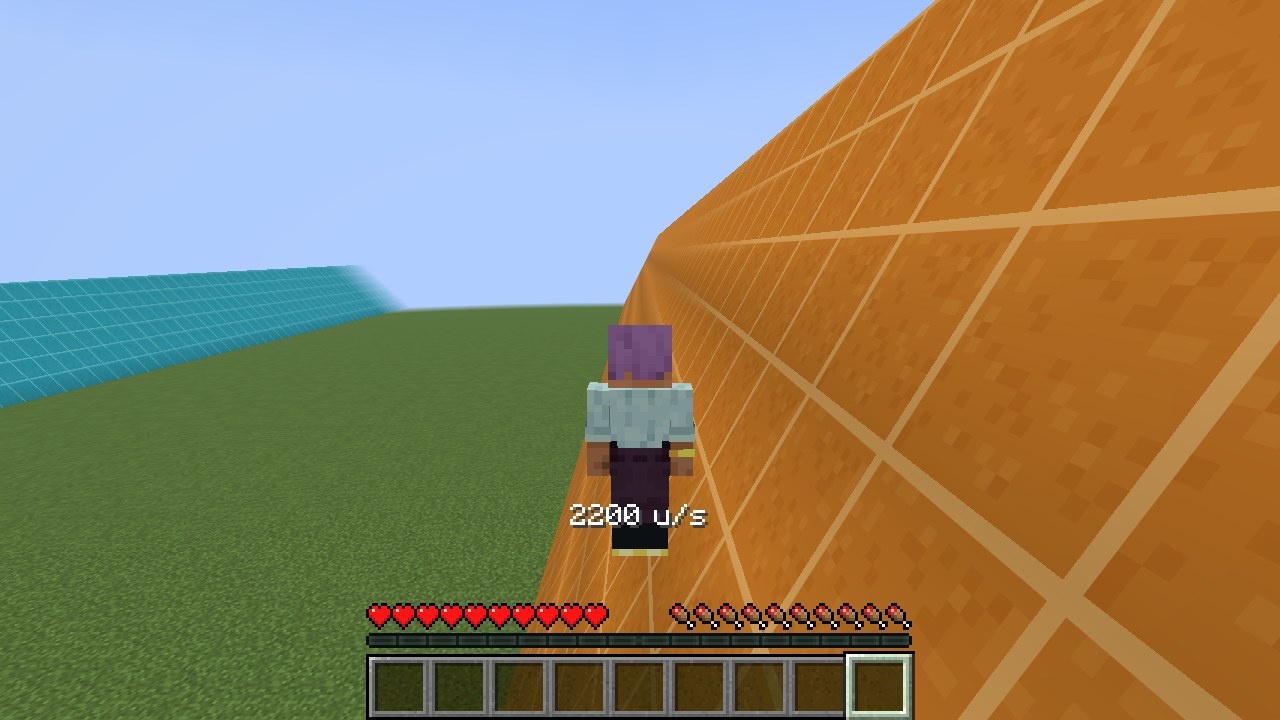
The same surf run against an in-process dedicated server over a real local connection, in survival, on the 63-degree ramp at 2200 units/s. 254 blocks along the ramp, plus four fast crossings over an apex: the server corrected nothing and logged no 'moved wrongly'.
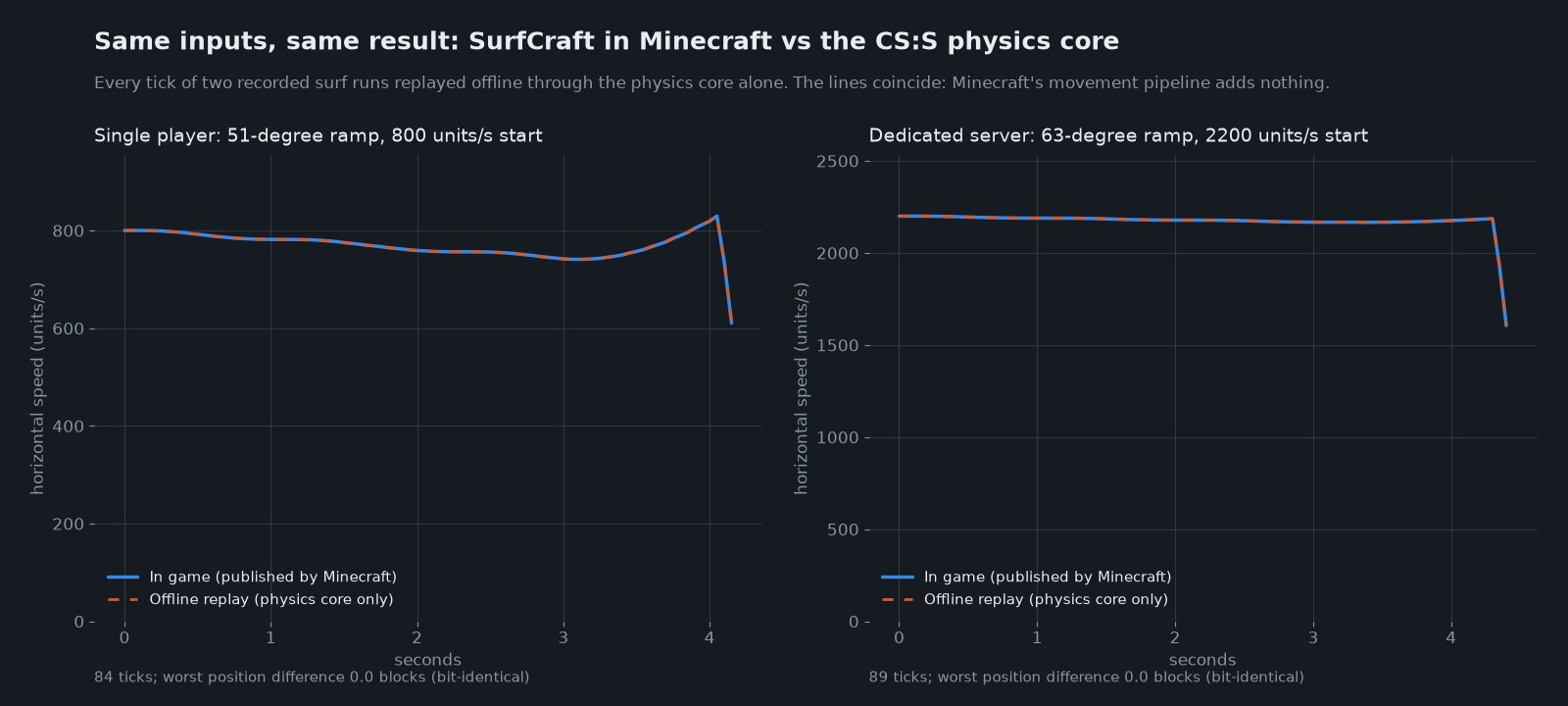
Speed every tick of two in-game surf runs (blue) against an offline replay of the same keys and mouse through the physics core alone (orange, dashed). Positions agree exactly, bit for bit: the Minecraft pipeline changes nothing about the CS:S movement.
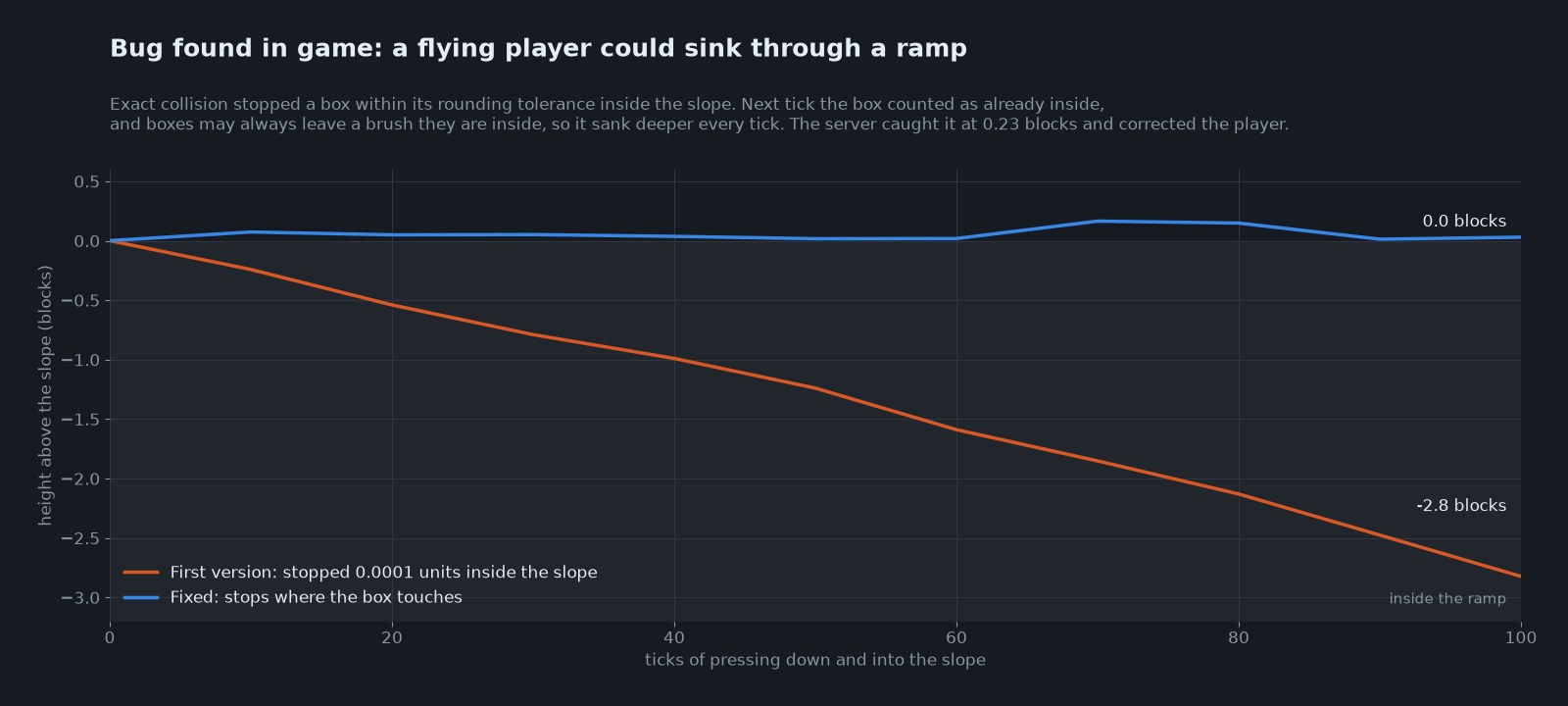
Found by the in-game test: a creative player flying into a slope could sink through it a hair per tick, because the exact collision stopped boxes a rounding tolerance inside. Now boxes stop where they touch: 3000 presses into the slope, zero penetration.
The Fabric placeholder icon is replaced with SurfCraft's own: a surf ramp in 3/4 view with the Karambit, drawn in code as 32x32 pixel art.
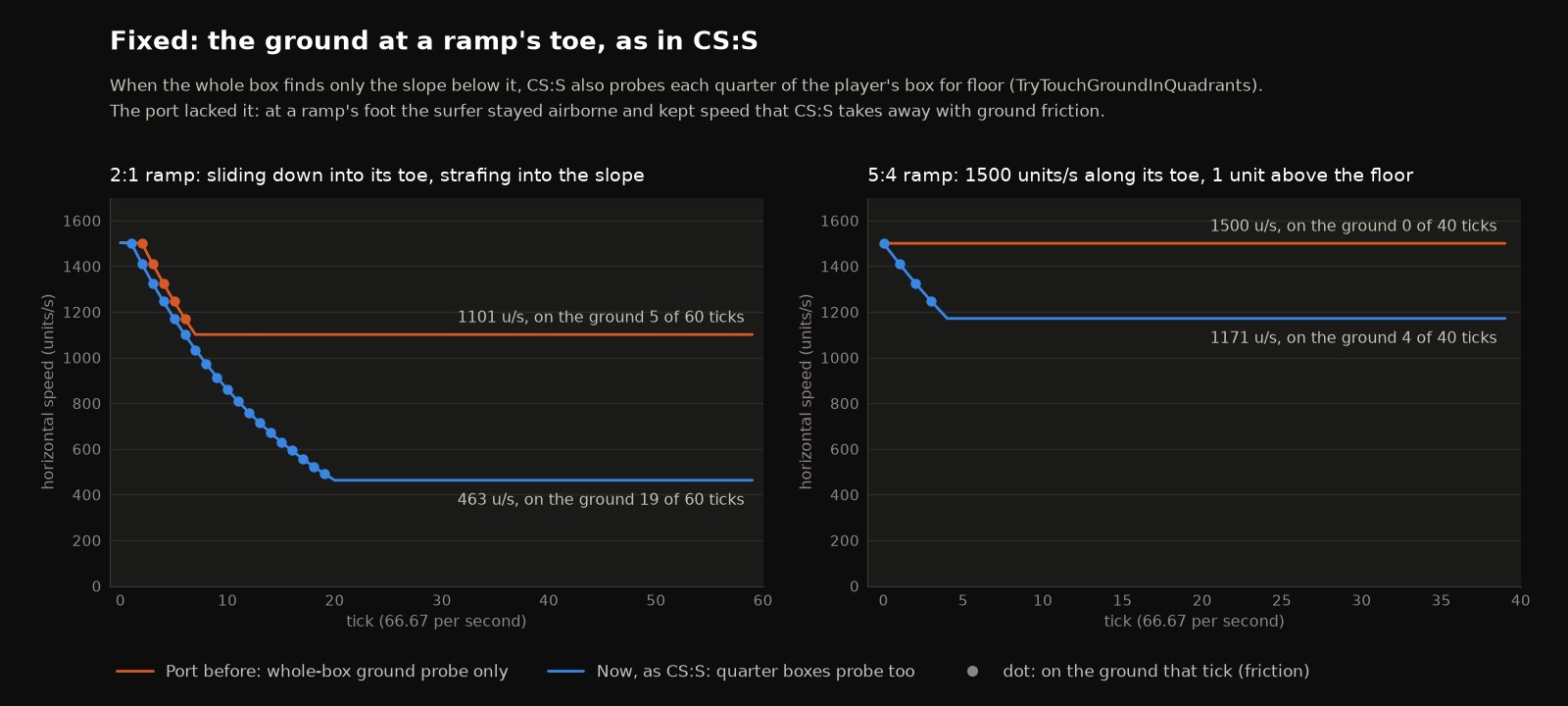
CS:S also probes each quarter of the player's box for floor; without it, a surfer at a ramp's foot stayed airborne and kept speed (2:1 toe: 1101 vs 463 u/s).
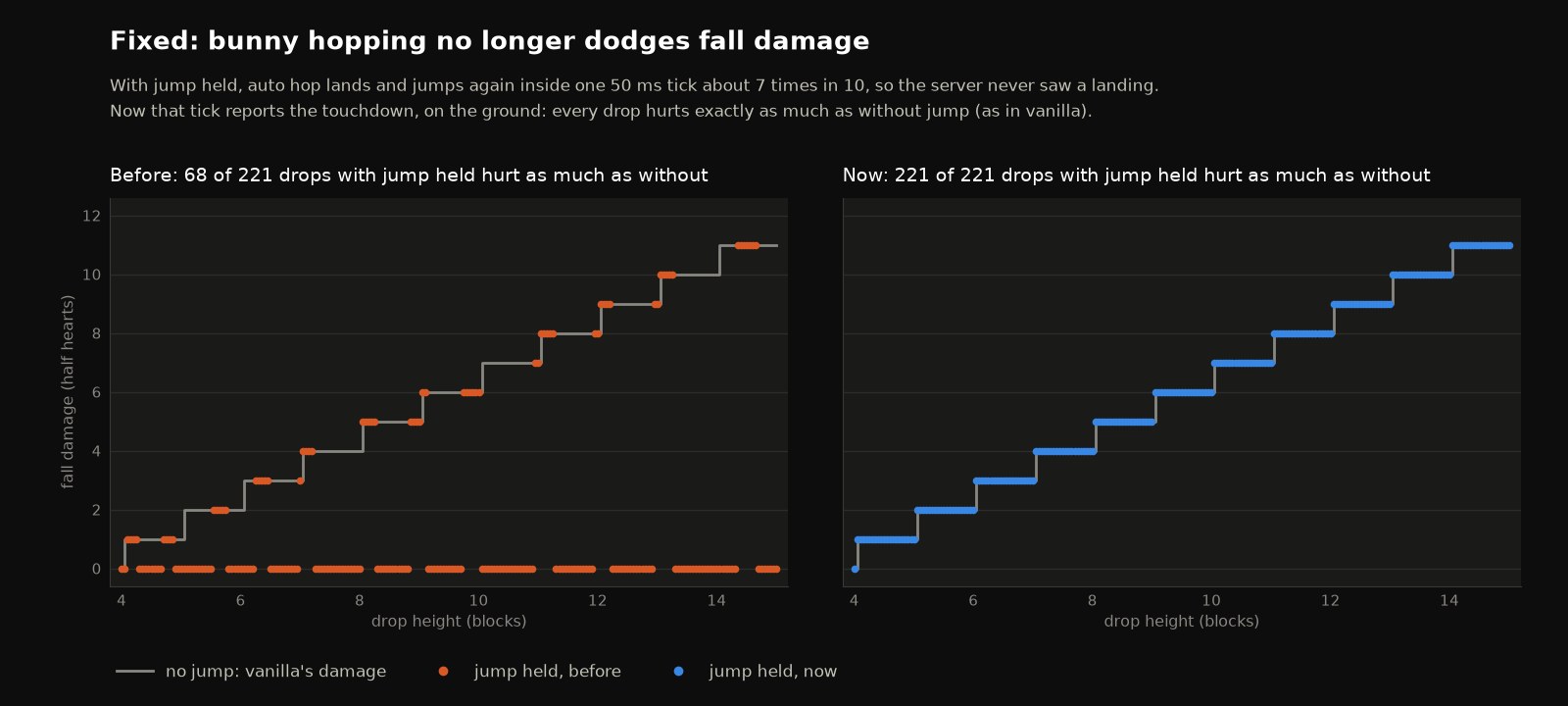
Auto hop landed and jumped within one tick 7 times in 10, so the server never saw the landing. Now that tick reports the touchdown: 221 of 221 drops hurt as without jump.
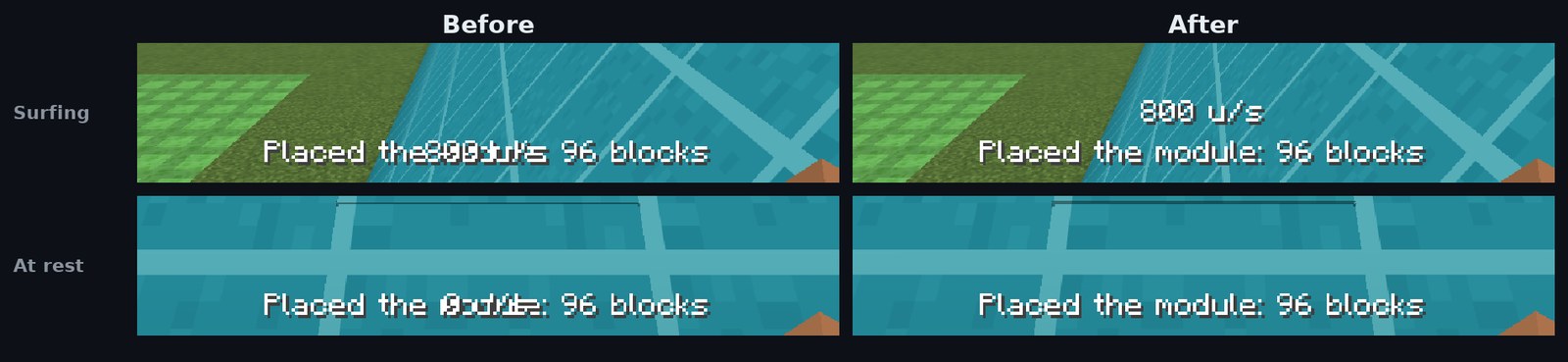
It was drawn on the action-bar line, garbling Karambit messages, and read 0 u/s at rest beside a ramp. Now it sits one line above and hides below 1 u/s.
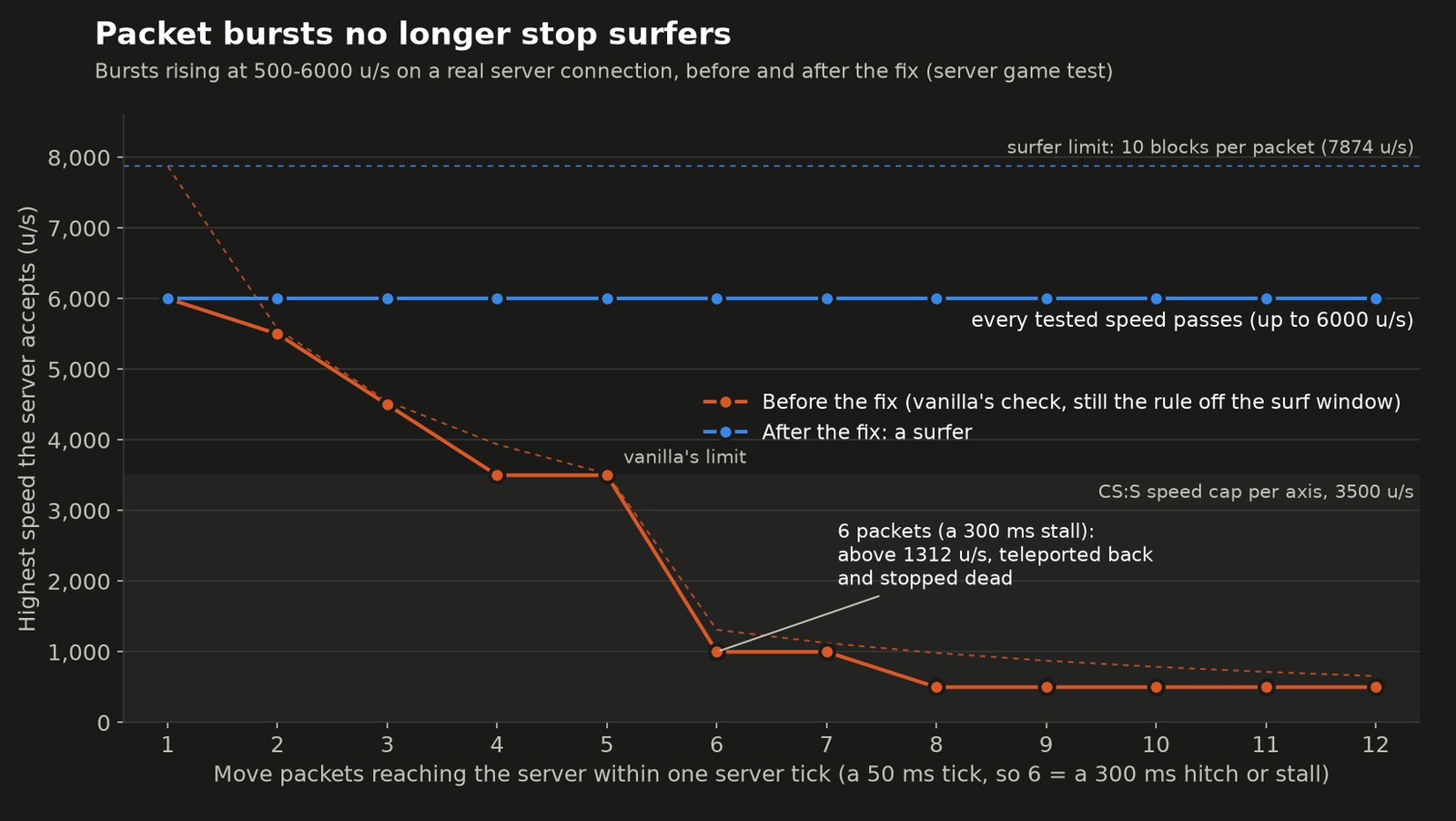
A 300 ms stall or client hitch lands 6 move packets in one server tick; vanilla's check sent surfers above 1312 u/s back and stopped them dead. Surfers now get a 10-block budget per packet (server game test).
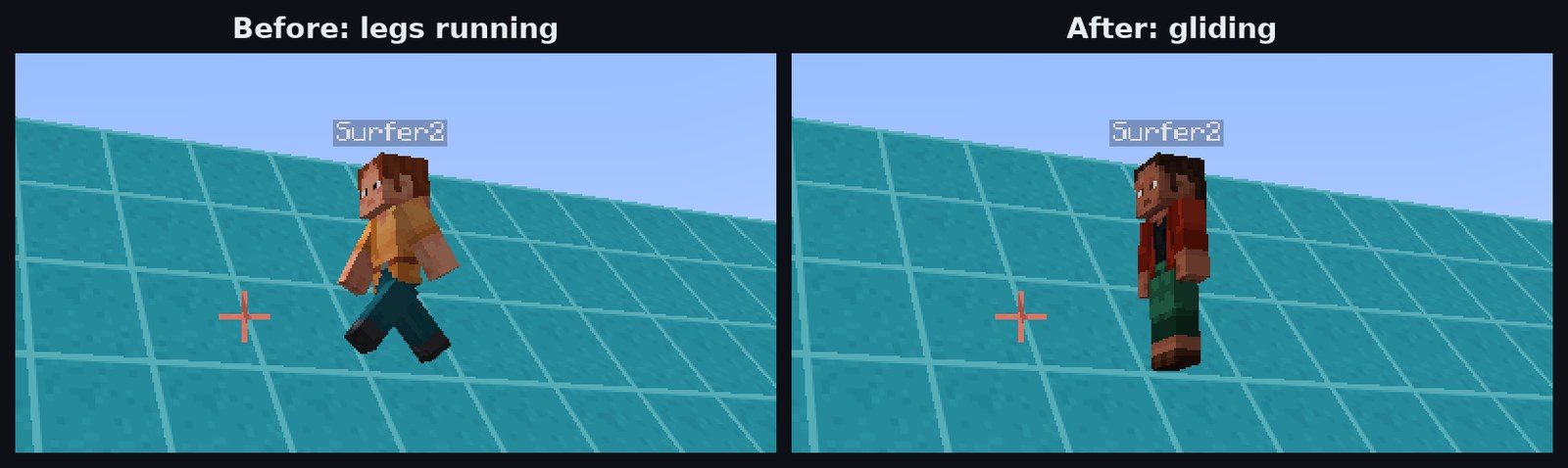
The server now tells each client who is surfing, so another player's legs settle on a ramp instead of running in mid-air.
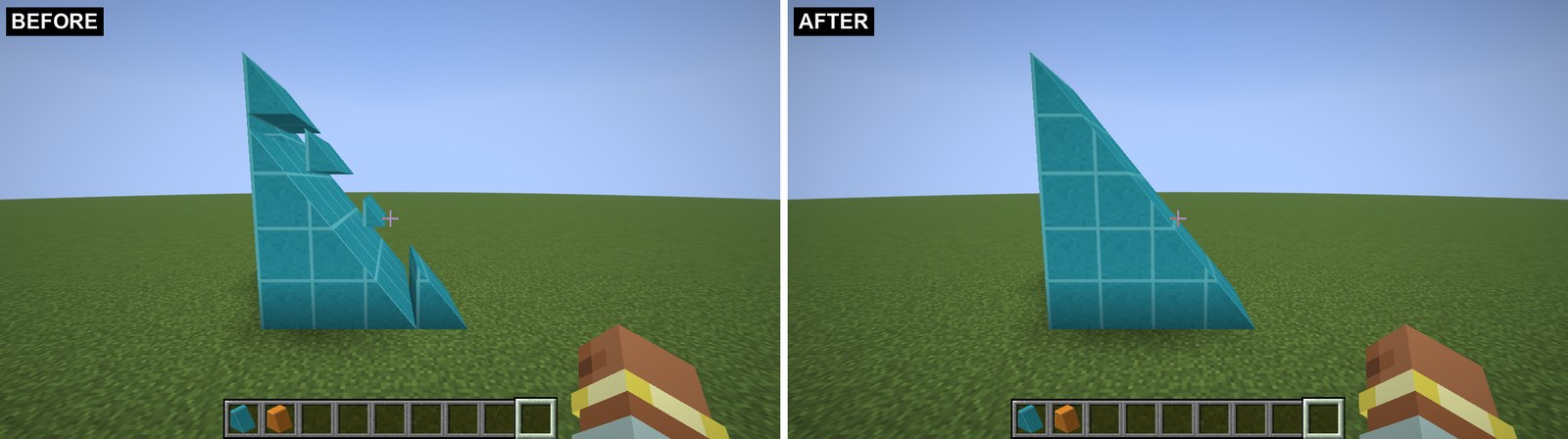
D1: a second 5:4 ramp built by hand beside the first came out as a sawtooth; placement now continues the ramp you click, then the cell's own slice, then the lower plane.
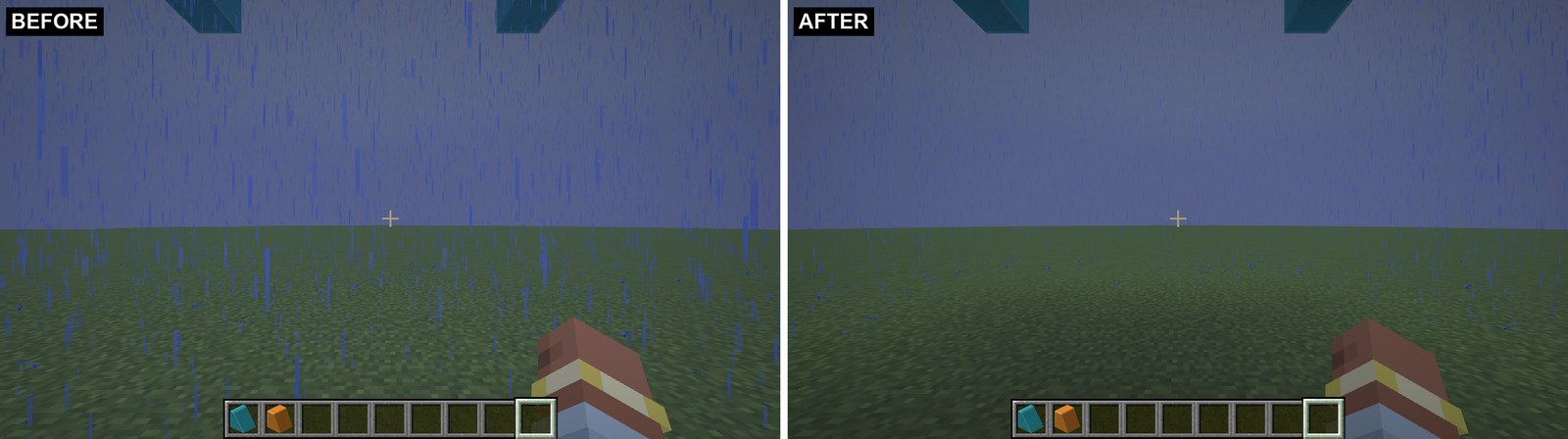
D2: ramps now block motion like smooth stone, so rain, snow and lightning stop on them; it used to rain under a hollow ramp roof.
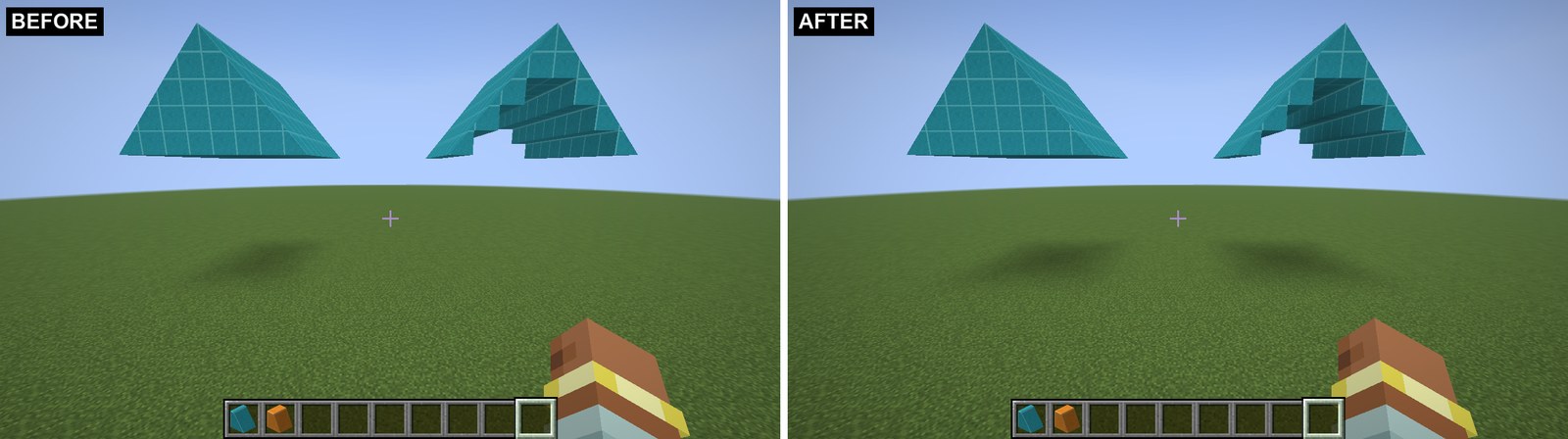
D5: occlusion shapes instead of noOcclusion: the hollow ramp (right) now shades the ground like the solid one, and hidden faces are culled.
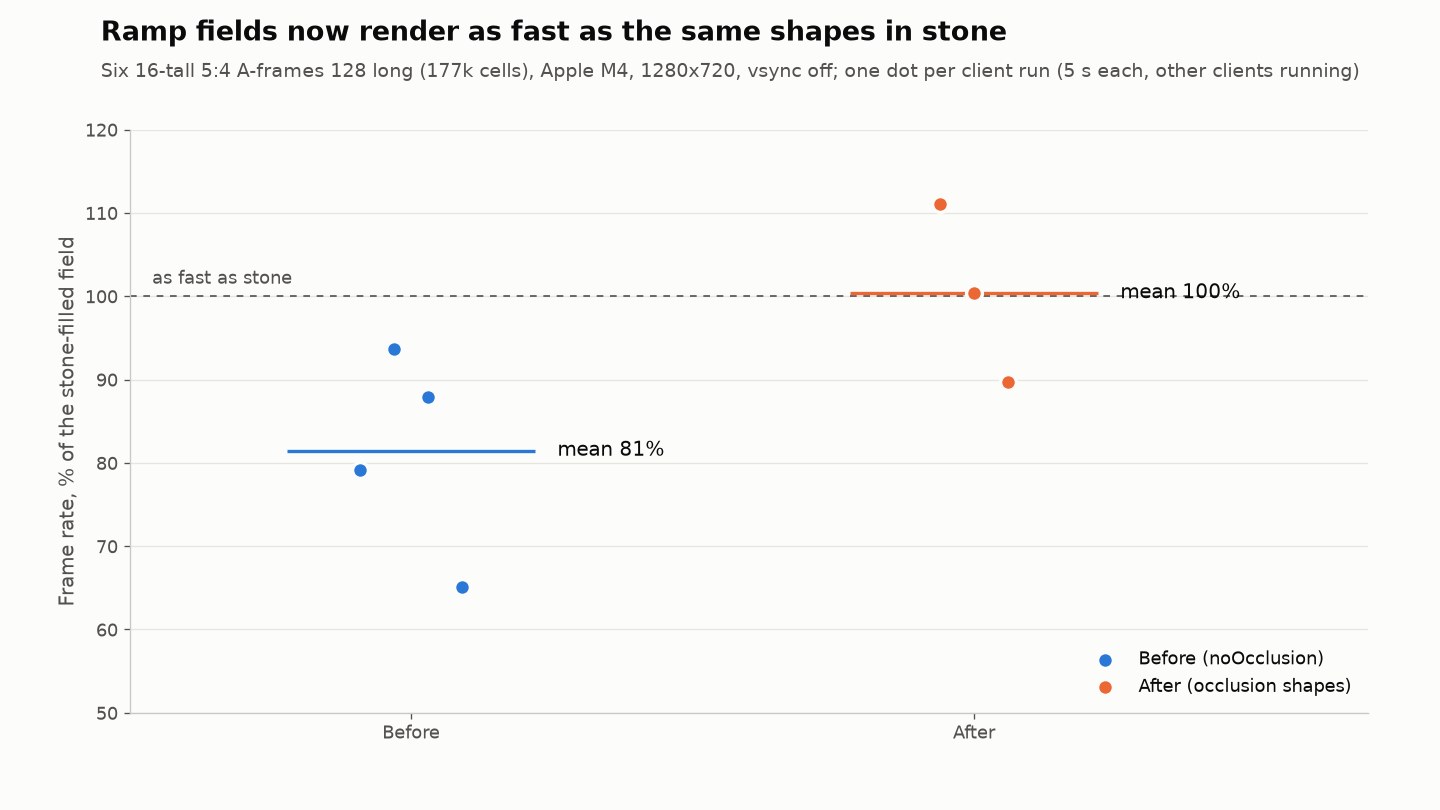
D5: frame rate over six 16-tall A-frames as a share of the same field in stone: 81% before, 100% after (one dot per client run).
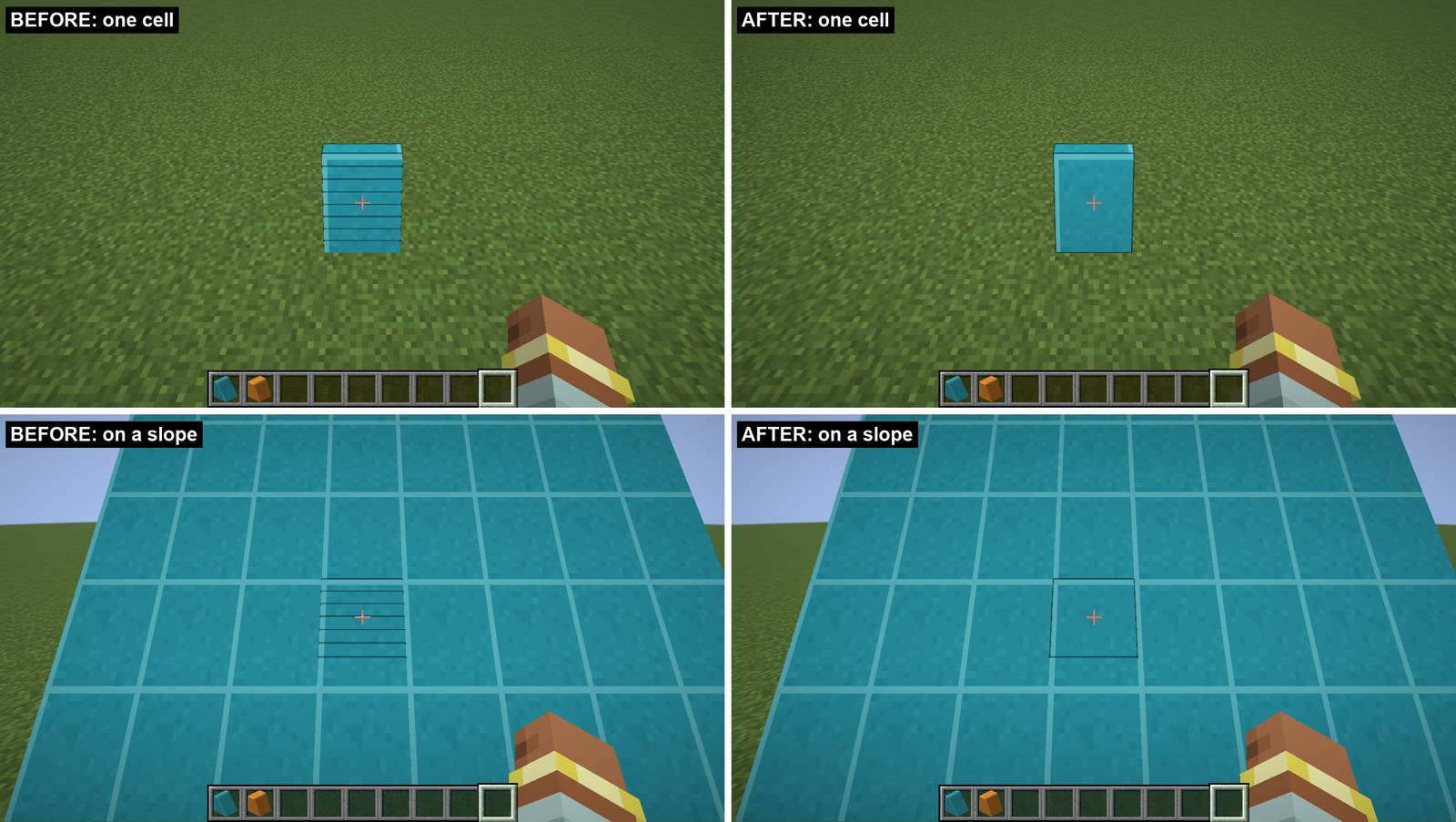
D9: the outline on a ramp traces the cell's exact edges instead of the 8-step staircase that collision uses.
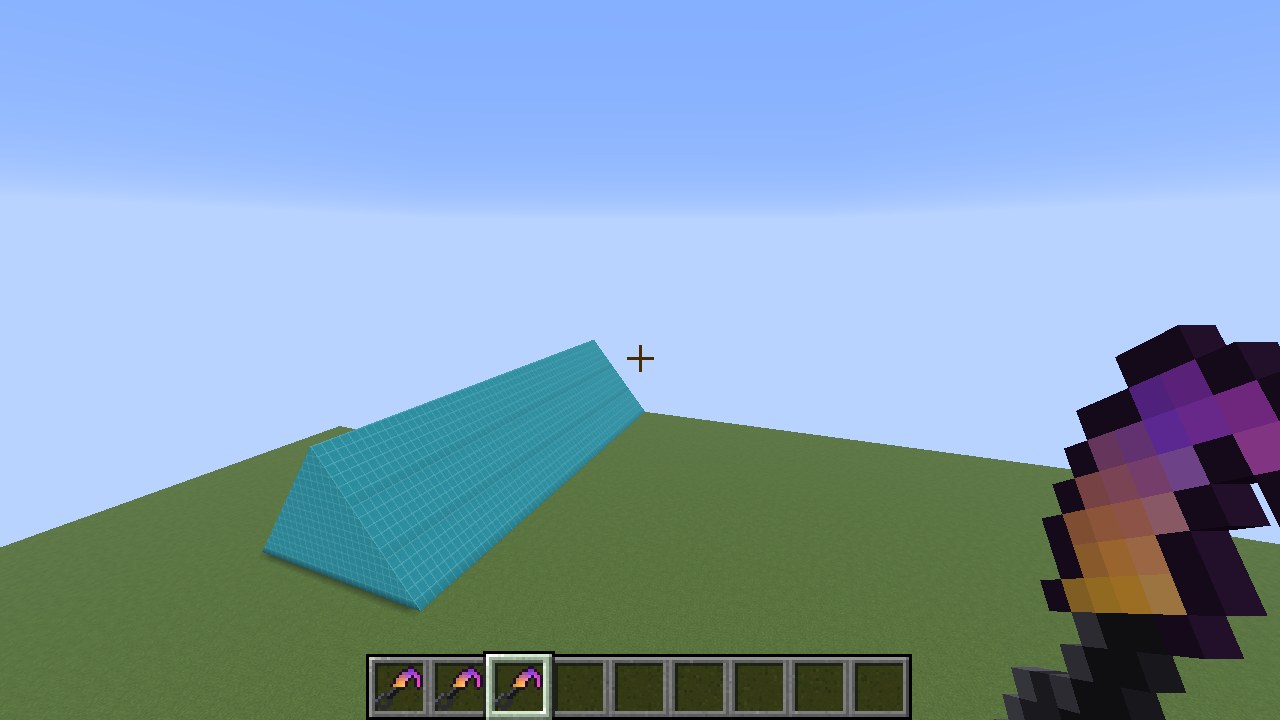
D4: extend reads only the ramp's end slice, so a copied 16-tall 5:4 A-frame grows to 208 blocks through real clicks (it used to stop at 40).
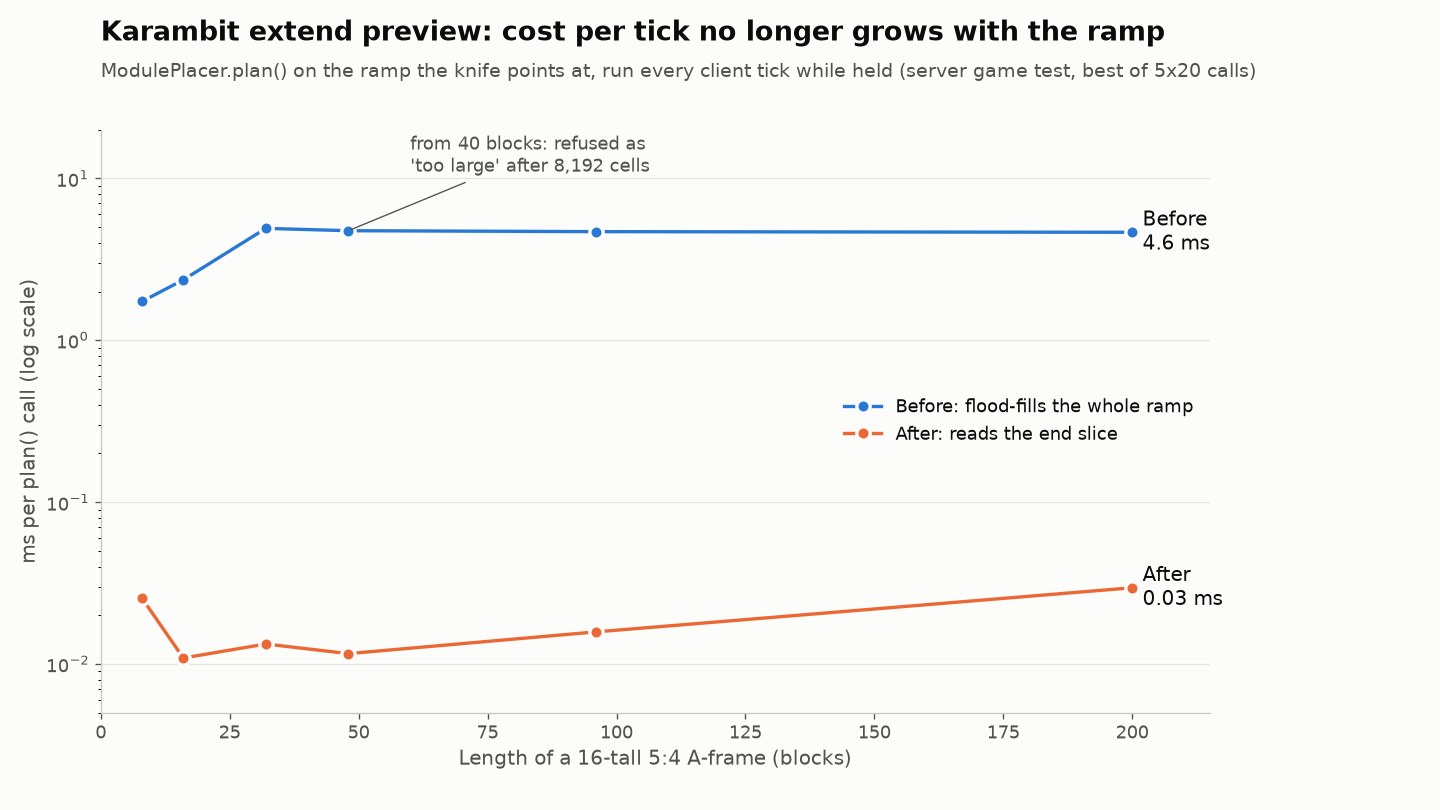
D3: plan(), run every tick while the knife points at a ramp, went from 1.7-4.9 ms (refusing past 8,192 cells) to about 0.03 ms at any length.
Survival: Karambit crafted by hand, 96-block ramp from 12 clicks, ramp 2 free-placed; two keyboard-and-mouse runs, 10.6 s and 123 blocks each, top 680 u/s, full health, 0 server corrections
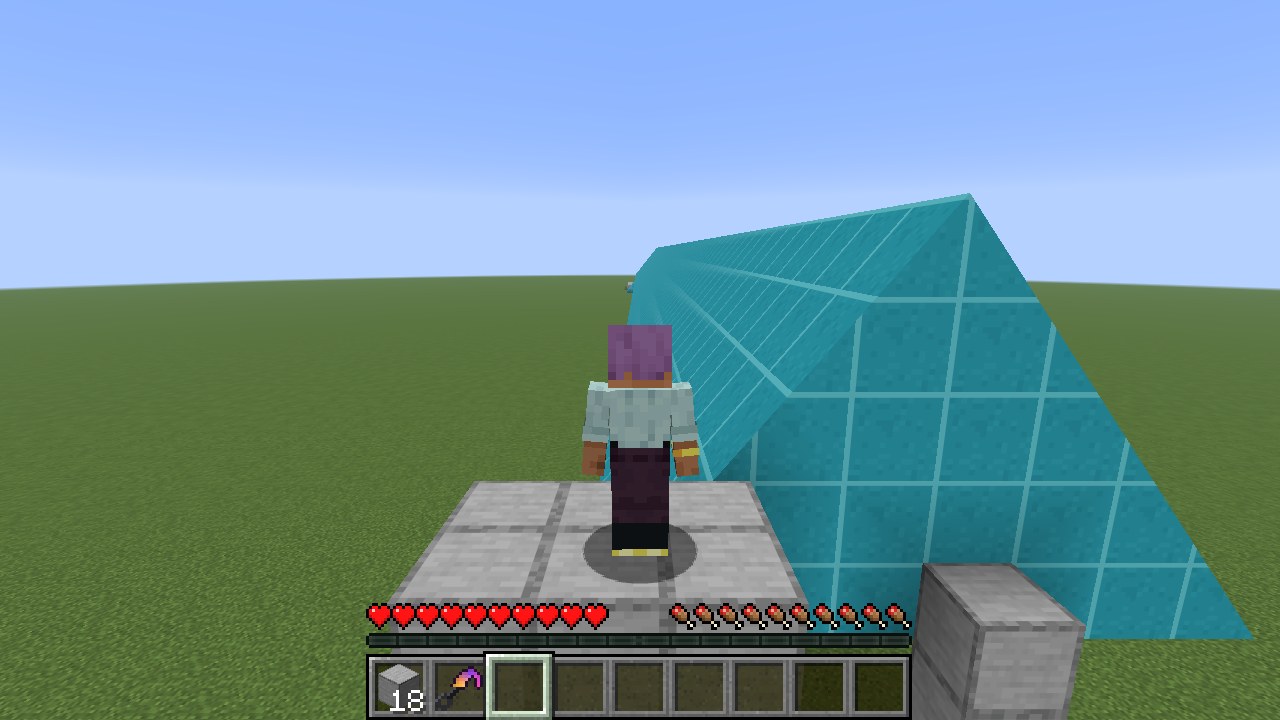
Survival, real clicks: ramp 1 hangs from a pillar the player jumped up, the Karambit placed it 4 up and extended it 11 times to 96 blocks; the pad clings to its north end.
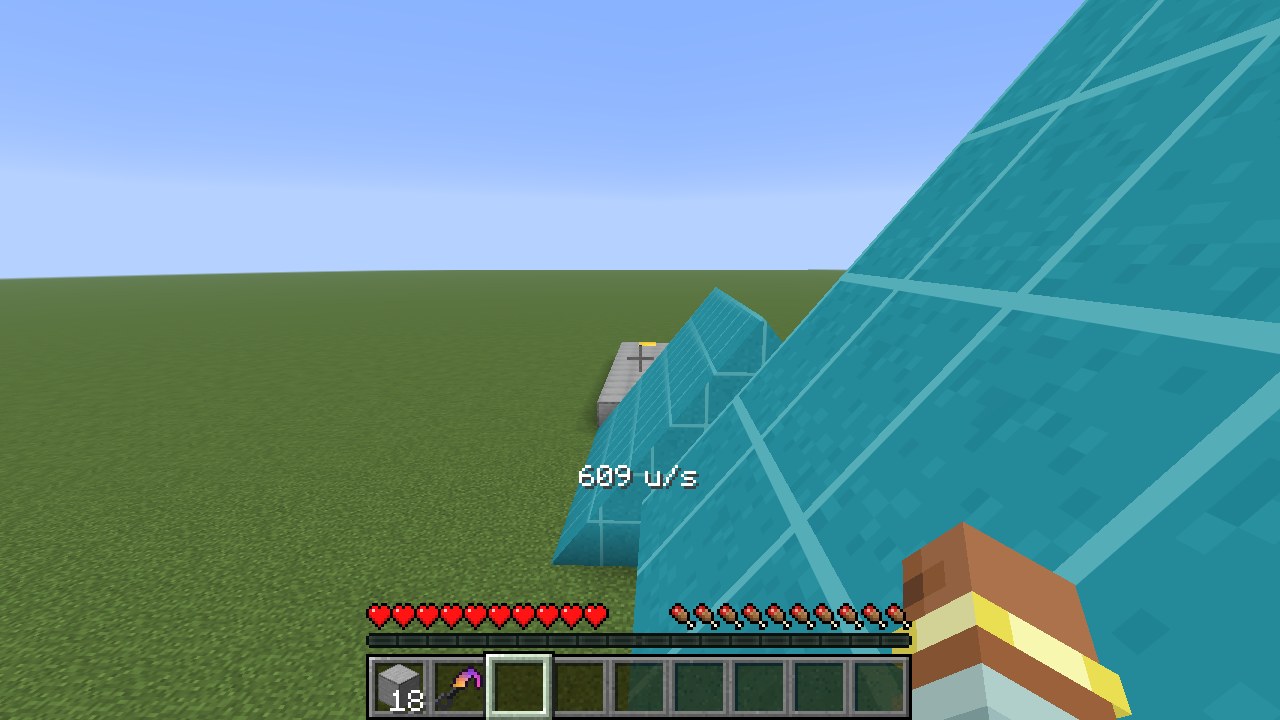
First person, keyboard and mouse: 96 blocks of surfing took the run-up's 250 u/s to 609; ramp 2 and the gold-marked finish pad wait below the 5-block gap.
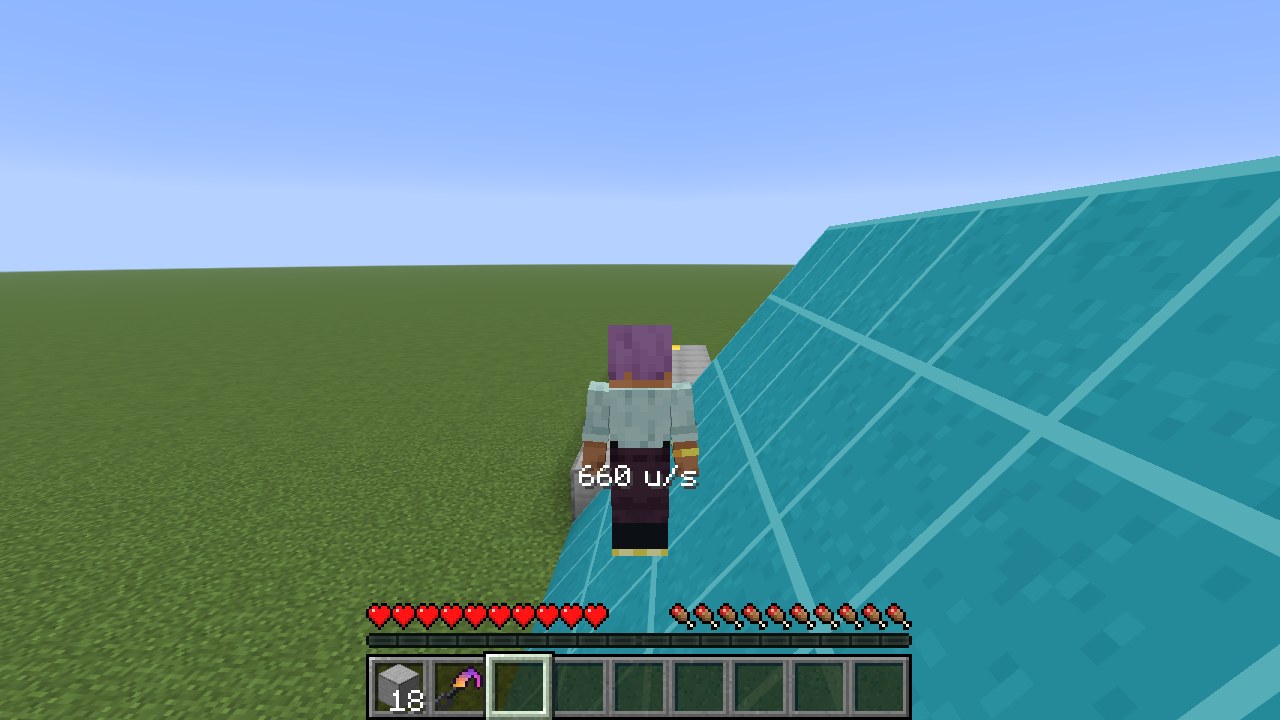
Run 2 after the gap's air strafe (A + mouse left, then D + mouse right): landed on the free-placed ramp 2 and gaining, full health, no server correction.
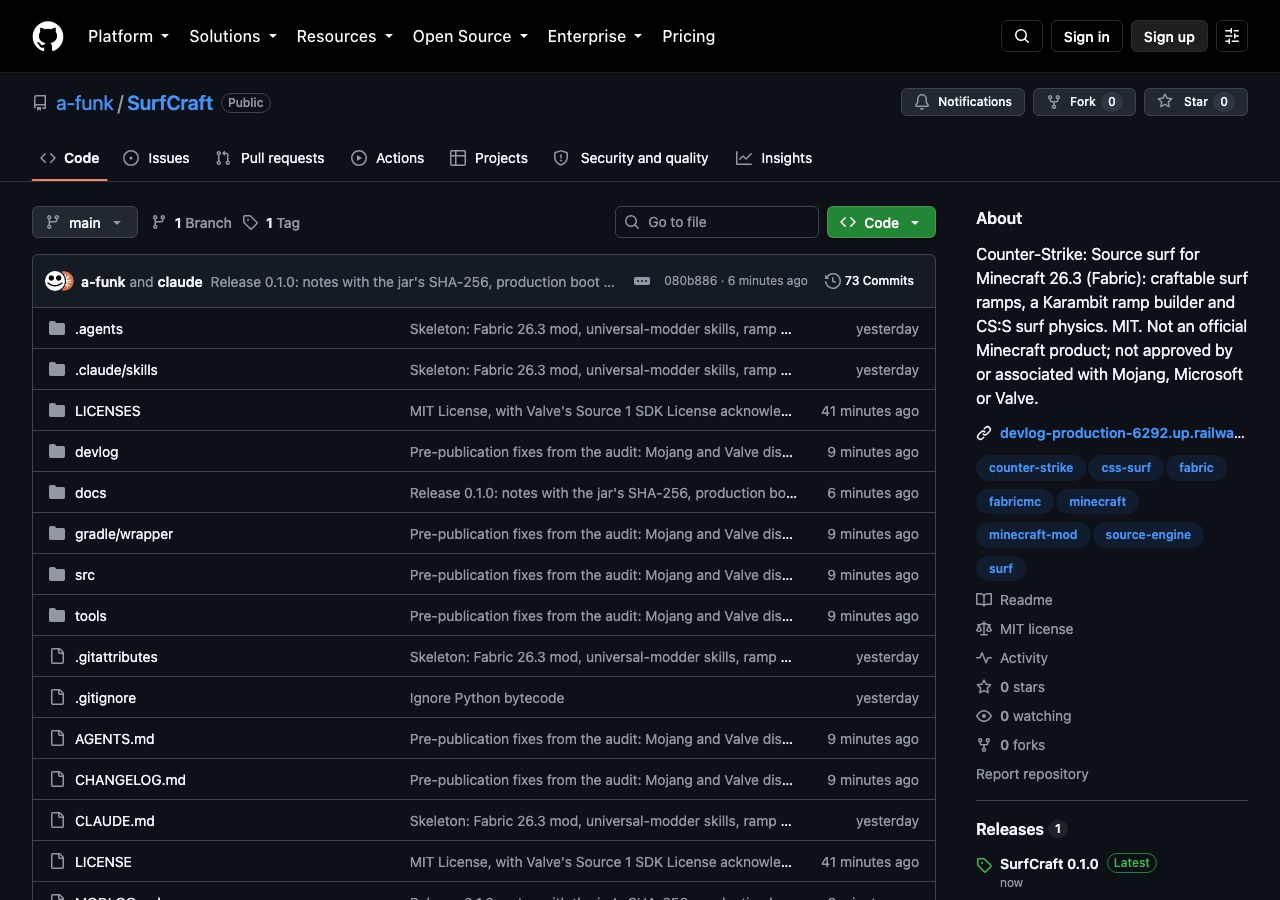
SurfCraft 0.1.0 is public at github.com/a-funk/SurfCraft under the MIT License (Valve's Source 1 SDK License acknowledged for the SDK-derived movement code), with the jar on the release page.